
Last updated November 2, 2026
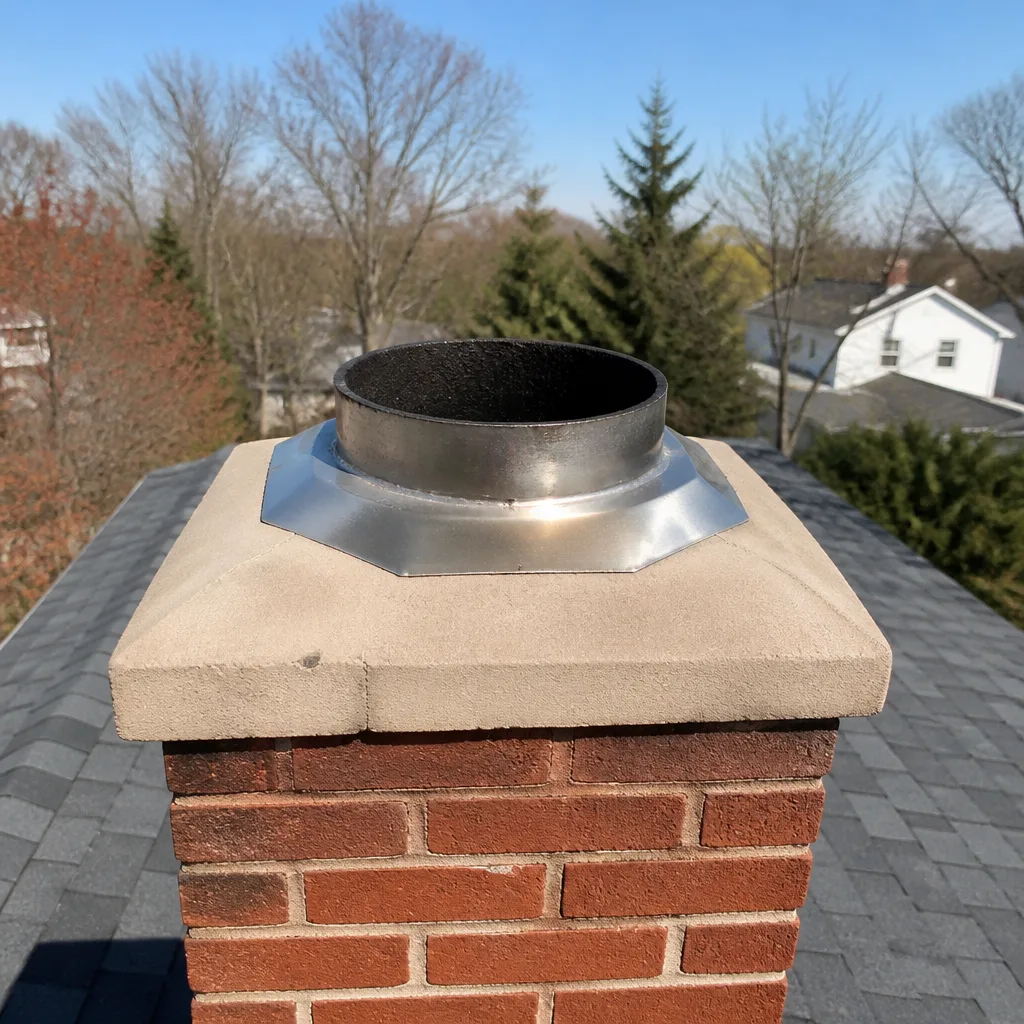 Sweep & inspection
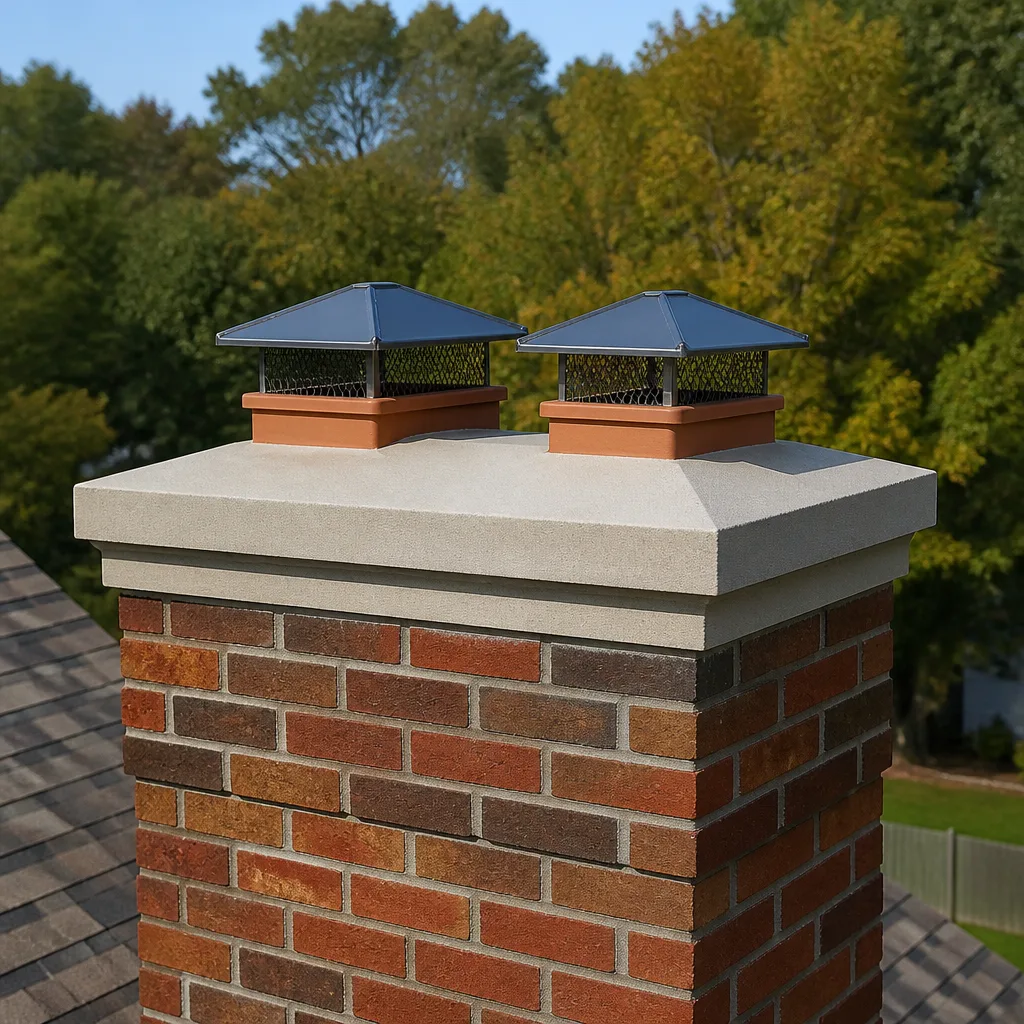 Caps & crowns
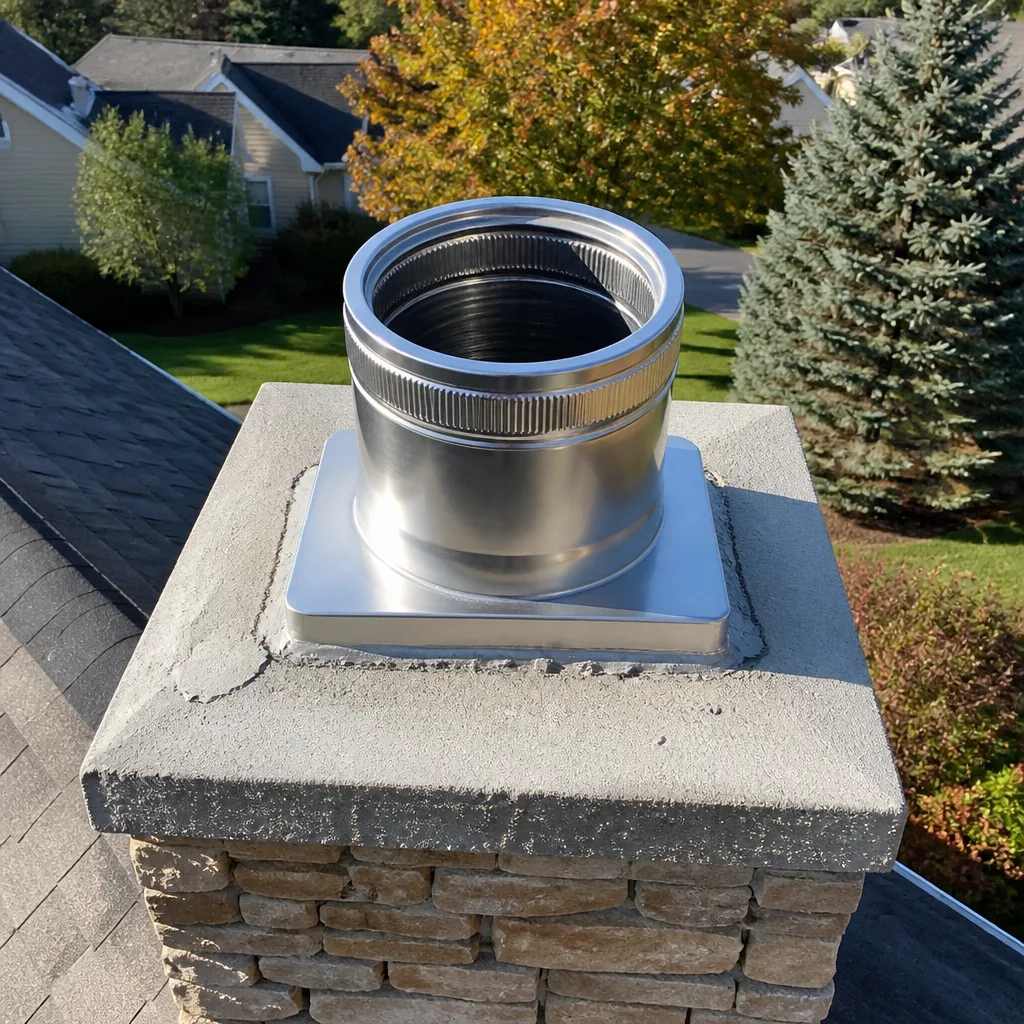 Flue relining
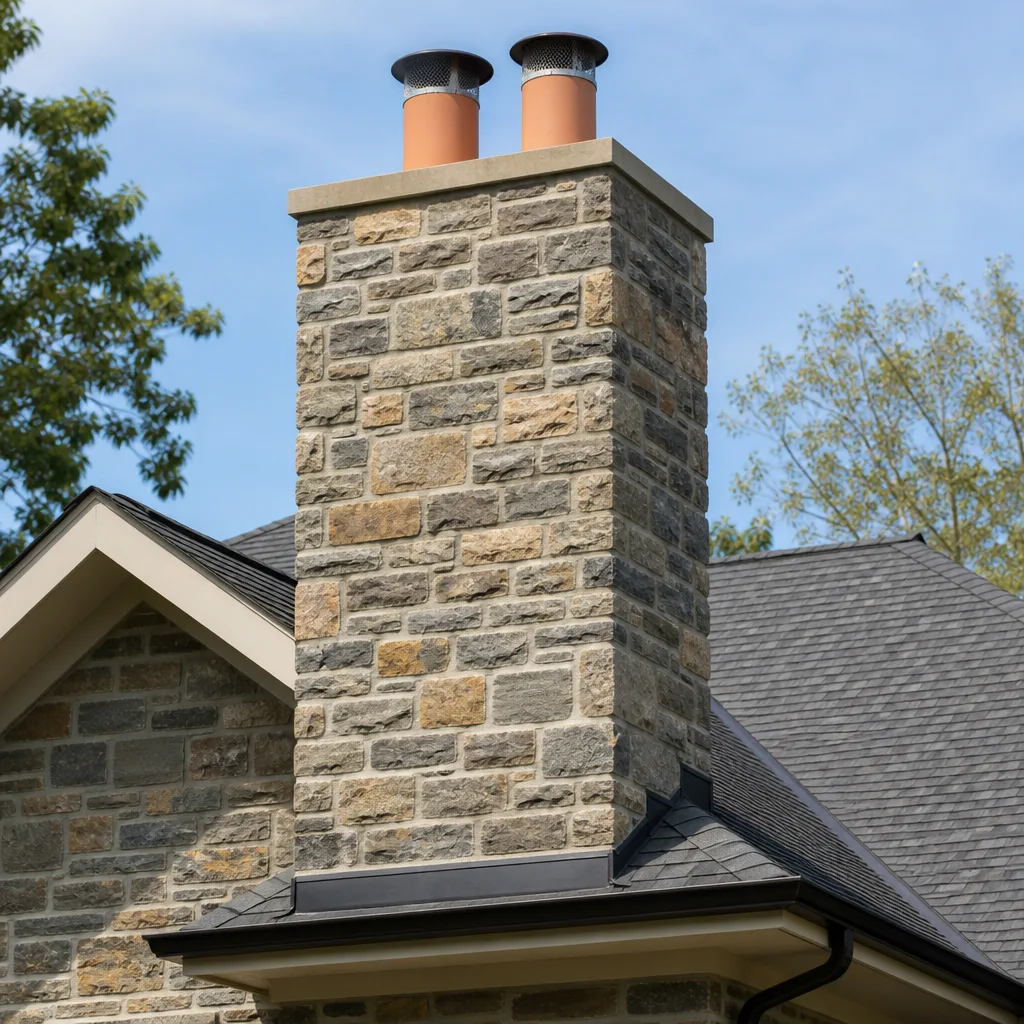 Masonry repair
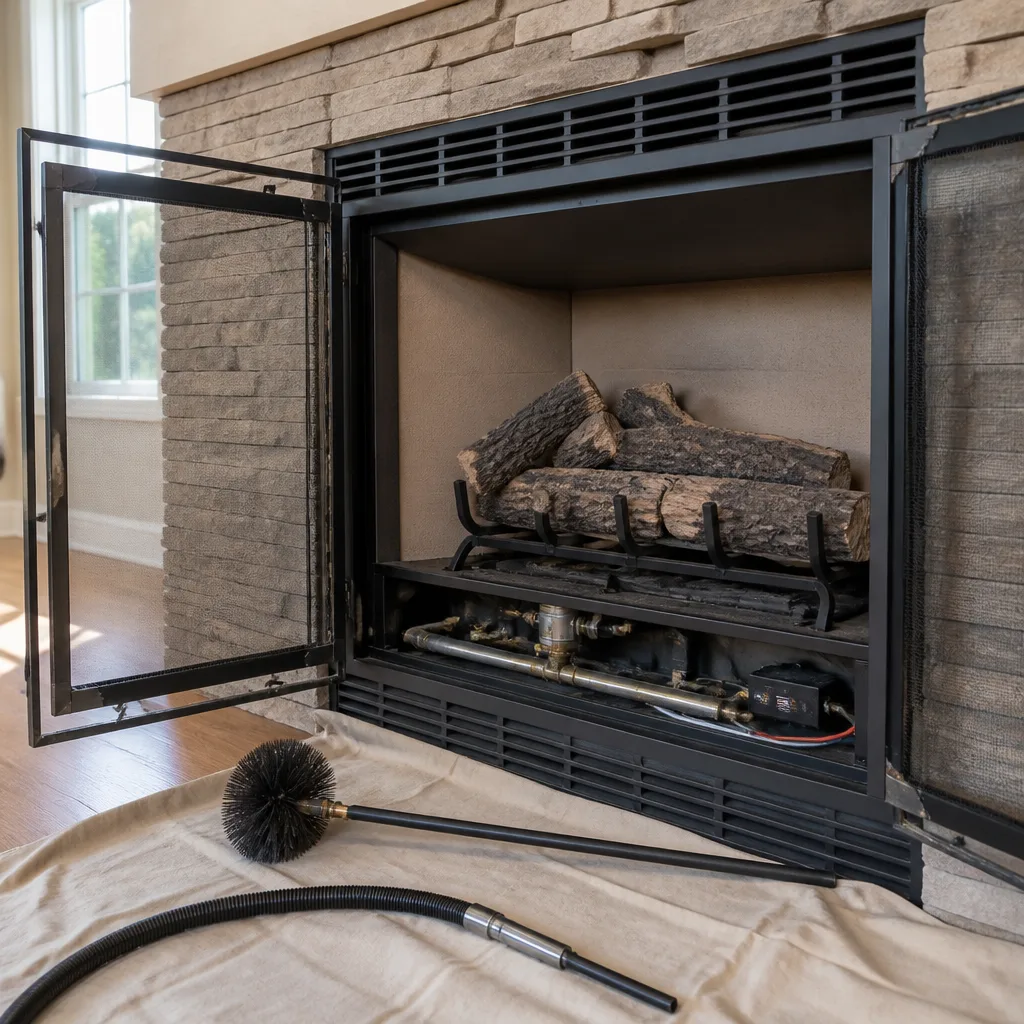 Gas fireplace service
Level 1 sweep and inspection to the NFPA 211 annual standard - flue, crown, cap, and flashing checked and photographed
Chimney sweep logs do not sweep chimneys. They loosen some creosote - which then falls where a brush and vacuum still have to collect it.
Chimney Sweep Maintenance Checklist for Vermont Vista Homeowners
During a Santa Ana wind event, a chimney without a fitted spark arrestor cap can pull airborne embers down the flue and deposit them against your attic framing. That’s not a hypothetical. It’s a documented ignition pattern in Southern California wildfires, and it’s the reason most generic chimney checklists fail Vermont Vista homeowners. They’re written for snowy climates where the seasonal enemy is creosote from winter wood burning. Here, the enemy list is longer: ember intrusion, dry-season soot accumulation, salt-tinged coastal air on masonry, and a wet/dry cycle that cracks crowns differently than freeze/thaw ever does. This guide is a working checklist built around the failure points we actually see in Vermont Vista chimneys, month after month.
Styles & brands we work with
- Sweep & inspection
- Caps & crowns
- Flue relining
- Masonry repair
- Gas fireplace service
Quick Answer
A chimney maintenance checklist for Vermont Vista homeowners should cover six zones: spark arrestor and cap integrity, flue and smoke chamber condition, firebox and damper function, exterior masonry and crown, gas vent connectors (if applicable), and documented maintenance history. The two items most standard checklists miss here are seasonal spark arrestor screening checks before fire-weather months and masonry crown inspections timed around Southern California’s wet/dry cycle, not freeze/thaw.
Table of Contents
- Spark Arrestor and Cap Integrity: The Fire-Weather Item
- Flue and Smoke Chamber: What to Look For Between Sweeps
- Firebox and Damper Self-Assessment
- Vent Pipe and Connector Checks for Gas Log Inserts
- Exterior Masonry and Crown: Timing It Right in Vermont Vista
- Documented Maintenance Log That Satisfies Insurance
- Seasonal Schedule for Vermont Vista’s Climate
- Common Mistakes to Avoid
- When to Call a Professional
- Frequently Asked Questions
- The Bottom Line
Spark Arrestor and Cap Integrity: The Fire-Weather Item
In Vermont Vista, your chimney cap is not a cosmetic accessory. It’s the first line of defense against ember intrusion during high-wind fire-weather events. A spark arrestor with mesh screening that’s intact and properly sized will stop most airborne embers from entering the flue. A missing, rusted, or poorly fitted cap will do the opposite. In our experience, homes within two miles of open brush or hillside terrain should treat cap inspection as a pre-fire-season requirement, not an optional upgrade.
Here’s the checklist for this zone:
- Mesh condition: Look for rust-through, missing sections, or mesh that’s been dented inward. Embers only need a gap the size of a pencil eraser to pass through. Spark arrestor mesh should meet the 3/4-inch maximum opening standard referenced in California building codes, but tighter mesh (3/8-inch or smaller) provides better ember protection without meaningfully restricting draft.
- Cap fit: The cap should sit flush on the flue tile or chase top with no visible daylight between cap and chimney. A cap that’s shifted off-center leaves a direct entry path for embers and rain.
- Legs and mounting: On masonry chimneys, check that the cap’s mounting legs or brackets are securely anchored. High Santa Ana winds will work loose any fastener that isn’t corrosion-resistant. Stainless steel hardware matters here. Galvanized hardware fails faster under coastal-adjacent humidity.
- Screen clarity: Even intact mesh can become blocked with soot, bird nesting material, or wind-blown debris. A blocked screen restricts draft and forces smoke back into the house. If you see visible accumulation from the ground, it’s time for a removal and cleaning.
Products like Olympia Chimney and Copperfield make stainless steel and copper caps with integrated spark arrestors that hold up to Southern California sun exposure far better than painted steel. When a cap needs replacement during a Chimney Sweep in Vermont Vista service, we specify stainless or copper for exactly this reason. They’re the only materials that won’t rust out within three to five years of coastal-adjacent weather.
If your cap was installed more than seven years ago and you’ve never inspected it, assume it’s compromised until proven otherwise. We find rust-through on roughly three out of ten caps in Vermont Vista homes that haven’t had a chimney service in over five years. That’s not a knock on the original caps. It’s what sun, salt, and ember exposure do over time.
Flue and Smoke Chamber: What to Look For Between Sweeps
A homeowner cannot fully inspect a flue from the top or bottom without specialized equipment. But you can gather useful information between professional chimney sweeping visits by observing what your chimney does during use. These observations tell you whether a professional inspection needs to happen sooner than your scheduled interval.
The observable checklist inside the house:
- Smoke rollout: When you open the firebox door or glass front during a burn, smoke should move up the flue, not spill into the room. Any rollout is a draft problem. Common causes in Vermont Vista include a partially blocked flue, a cold flue that hasn’t been primed, or a smoke chamber with significant creosote accumulation.
- Odor when not in use: A chimney that smells strongly of soot or creosote during warm months is telling you moisture is interacting with accumulated deposits. In Southern California’s dry season, that odor is often a sign of a flue that hasn’t been swept recently enough, or a cap that’s letting humidity in during the winter wet period.
- Debris in the firebox: If you find flakes of creosote, pieces of mortar, or small animal nesting material in the firebox after a windy night, something is deteriorating or dislodging inside the flue. Note it and schedule an inspection.
- Visible smoke from the exterior chimney: A properly functioning wood fireplace produces light, barely visible exhaust once the fire is established. Dark, thick smoke from the chimney top during normal burning indicates incomplete combustion, wet wood, or a draft restriction.
The smoke chamber (the angled transition between firebox and flue) is where we frequently find hidden creosote accumulation in Vermont Vista homes that burn wood seasonally. It’s a difficult area to access without professional tools, which means it often goes unaddressed in DIY maintenance routines. If your sweep hasn’t specifically mentioned smoke chamber condition in their last report, ask about it. That one zone accounts for a meaningful share of chimney fire starts because creosote there is exposed to high heat during every burn cycle.
For chimney repair when flue or smoke chamber damage is found, Chimney Repair in Vermont Vista addresses the problem at the source rather than deferring it. Degraded flue tiles or cracked smoke chamber parging don’t self-heal. They worsen with every hot burn and every temperature swing between July and January.
Firebox and Damper Self-Assessment
Firebox inspection is something you can meaningfully do yourself between professional visits. It doesn’t require climbing on the roof or disassembling anything. You need a flashlight, a mirror for looking upward, and about ten focused minutes.
Step-by-step self-assessment:
- Cool down completely: Wait at least 48 hours after the last fire before doing any hands-on inspection. Firebox brick holds heat longer than you expect, and ash can conceal hot coals.
- Clear the firebox: Remove ash and any remaining wood. Use a metal ash bucket with a lid. This isn’t just about cleanliness. Ash buildup traps moisture against firebrick and accelerates deterioration in Vermont Vista‘s humid winter weeks.
- Inspect firebrick faces: Look for spalling (surface flaking), deep cracks wider than a dime, or missing brick sections. Hairline cracks are common and often non-urgent. Sections where brick face has fallen away expose the firebox’s structural layer and need professional assessment.
- Check refractory mortar joints: Run your finger (lightly, with a glove) along mortar joints in the firebox walls. If mortar crumbles or falls out on contact, the joint is compromised. Several failed joints mean the firebox needs repointing, which is a repair task, not a cosmetic one.
- Operate the damper fully: Open and close the damper through its full range. It should move smoothly and seat fully closed with no visible gap when shut. A damper that won’t fully close is an energy leak year-round and a moisture entry point during winter rains.
- Look up with a mirror: Angle a mirror upward to check that the damper opening is clear of debris and that you can see at least a few feet up the flue. If you see a solid wall of black accumulation within reach of the damper, a sweep is overdue.
None of these steps replace a professional sweep, and performing them shouldn’t change your maintenance interval. What they do is catch developing problems before they become fires, carbon monoxide incidents, or multi-thousand-dollar masonry repairs. They also give you a baseline so you can speak specifically about what you observed when you schedule service.
Vent Pipe and Connector Checks for Gas Log Inserts
Gas log inserts and gas fireplaces represent a large portion of Vermont Vista heating setups, and they’re the most overlooked segment of California chimney systems. The assumption is that gas burns clean and therefore doesn’t need chimney maintenance. That assumption is wrong in a specific way: gas appliances don’t produce creosote, but they do produce acidic condensation that corrodes metal vent components, and they rely on precise venting to carry carbon monoxide completely out of the house.
Here’s what to check if you have a gas log set or gas insert:
- Vent connector condition: The metal pipe connecting the appliance to the flue or exterior vent should show no white corrosion, no rust-through, and no loose joints. Galvanized connector pipe in a gas application corrodes from the inside out, so external rust is a late-stage warning.
- Termination cap: The exterior vent cap should be clear of debris, bird nesting, and any type of screen blockage. A blocked termination cap on a gas appliance is a direct carbon monoxide hazard because exhaust has nowhere to go.
- Glass seal and gasketing: On direct-vent or sealed-combustion units, the glass face should seat fully against the gasket with no visible gaps. A leaking gasket allows combustion gases into the living space. If you smell a sulfur or “odd” odor when the gas fireplace runs, shut it off and call a professional before using it again.
- Burner flame appearance: A properly adjusted gas burner produces a blue flame with yellow tips. A lazy, mostly-yellow flame indicates incomplete combustion, which produces more carbon monoxide and deposits soot on the glass and vent surfaces faster.
Vent pipe replacement and connector work is rarely DIY territory. Gas appliance venting falls under mechanical code requirements, and incorrectly assembled vent pipe is worse than no maintenance at all, because it creates a false sense of safety while leaking exhaust. When a gas system needs service in Vermont Vista, the repair falls under the same Chimney Repair in Vermont Vista scope as a masonry fix, handled by people who understand combustion appliance venting rather than a handoff to a third party.
We’ve mentioned Famco in the context of vent components because they manufacture the type of connector pipe, caps, and termination fittings that hold up to gas appliance exhaust. The material choice matters. Thin-gauge, unbranded vent pipe fails faster and more dangerously than a manufacturer with an actual engineering team behind its products.
Exterior Masonry and Crown: Timing It Right in Vermont Vista
Most maintenance guides tell you to inspect exterior masonry before winter. In Vermont Vista, the timing should be inverted: inspect in late summer or early fall, before the first Santa Ana winds and before the brief but real wet season. Here’s why. Southern California’s wet/dry cycle puts masonry through a different stress pattern than northern climates. Masonry absorbs moisture during even a single heavy rain day, then cooks dry under weeks of sun and heat. The repeated expansion and contraction from that cycle is what cracks crowns, not ice.
Exterior checklist items, in order of priority:
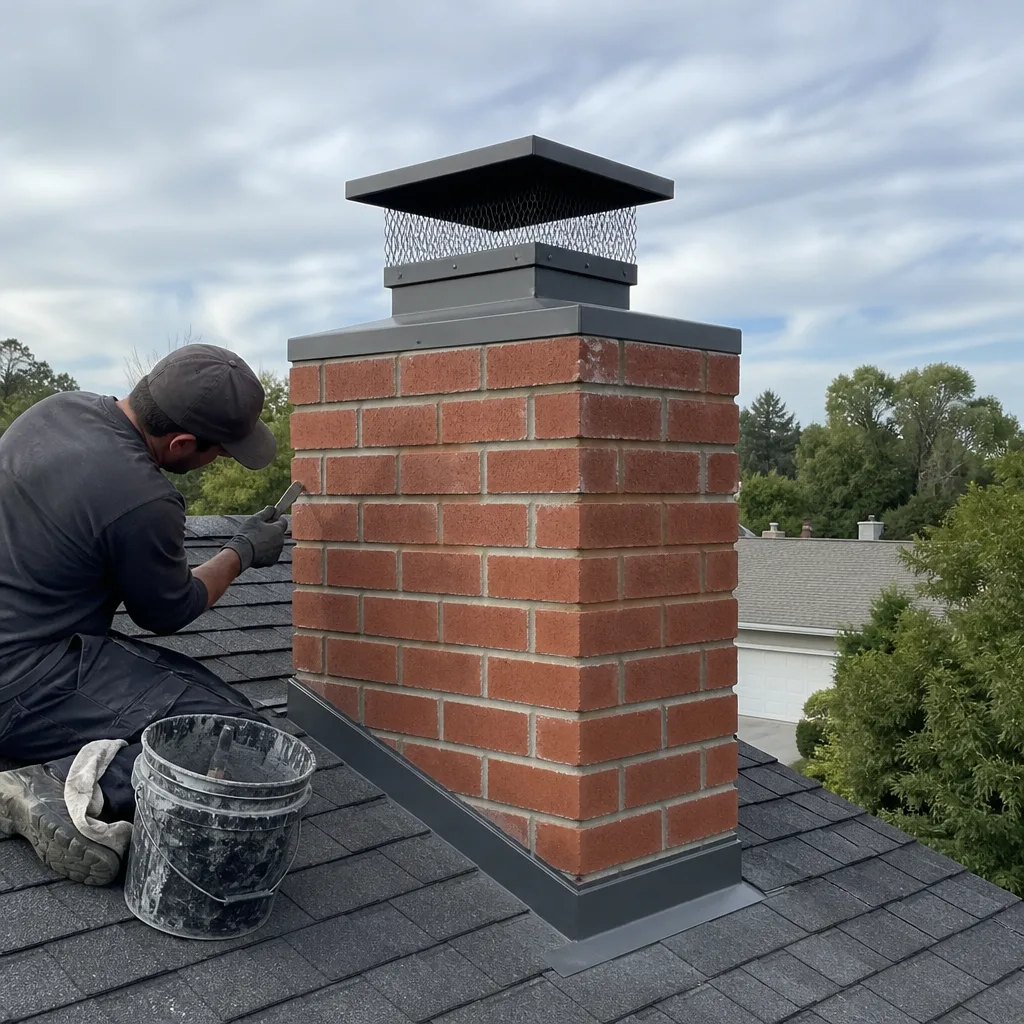
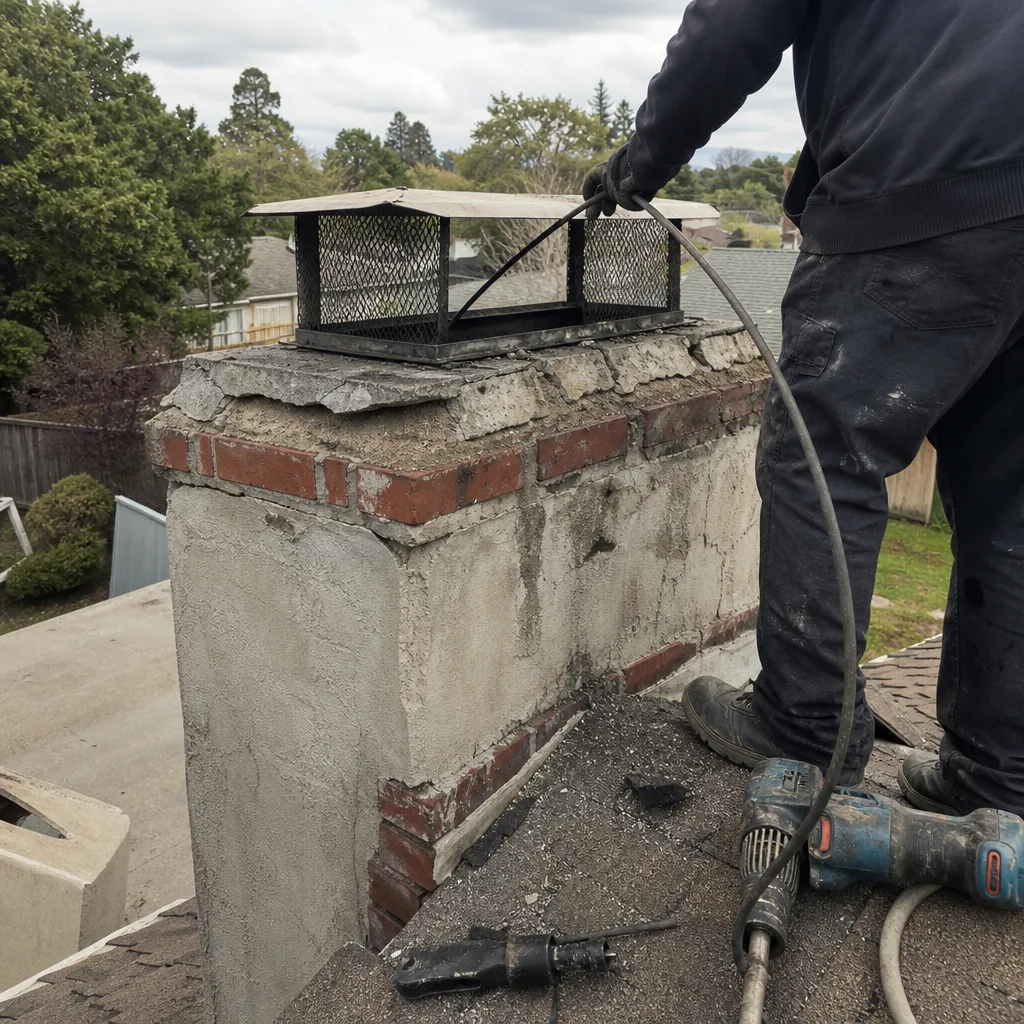
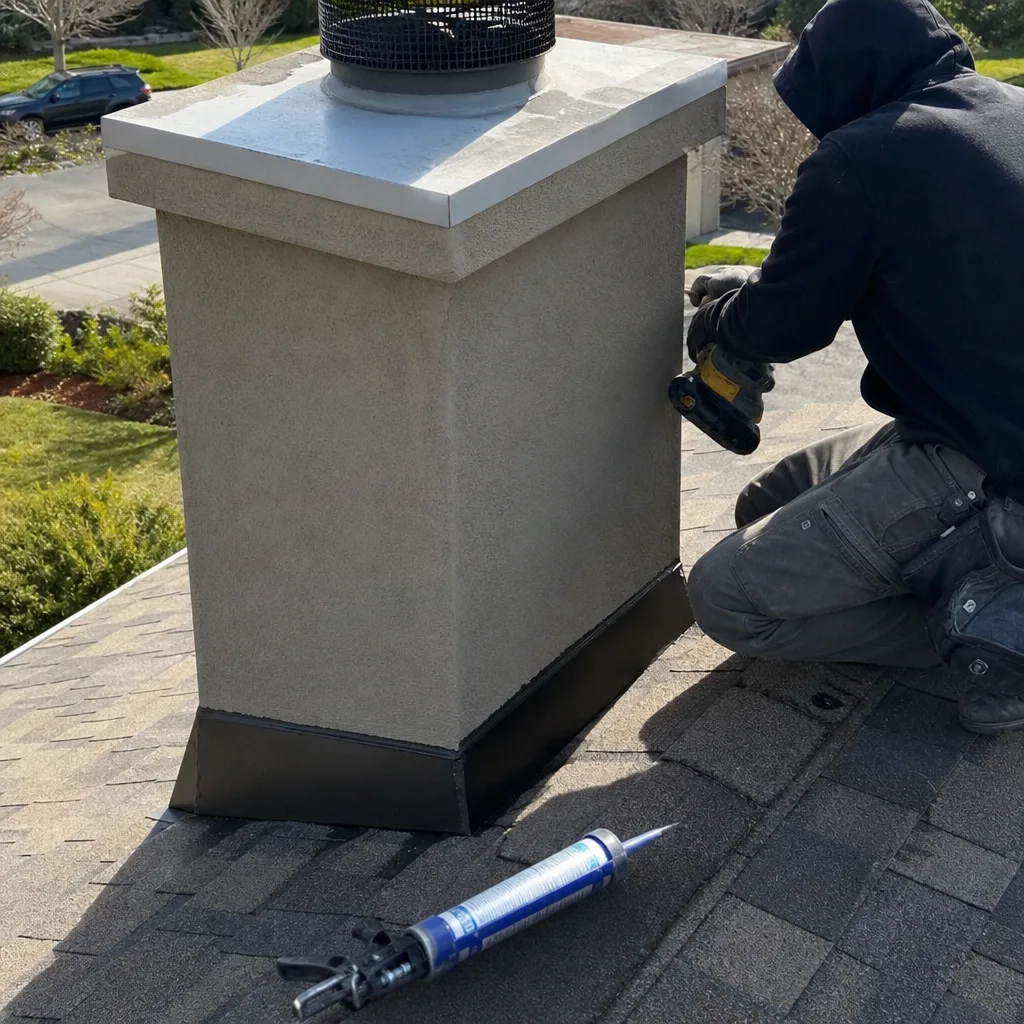
- Crown condition: The crown is the concrete or mortar slab at the very top of the chimney, surrounding the flue tile. Look for visible cracks wider than a credit card, spalling (surface pitting and flaking), or areas where water appears to pool instead of draining. A failed crown is the primary cause of water damage inside masonry chimneys, because water that enters the crown travels down through the chimney structure and attacks both mortar joints and the flue liner from outside.
- Mortar joint erosion: Run your eyes along mortar joints from the ground, or with binoculars if needed. Joints should be flush with the brick face. Eroded joints (recessed more than 1/4 inch) let water behind the brick, which accelerates spalling. Repointing is a repair task that prevents much larger structural work later.
- Brick spalling: Look for brick faces that have flaked off, leaving a smooth or concave exposed area. Spalled brick in the exterior masonry structure is a warning that moisture has been getting into the bricks and is doing damage from within.
- Flashing at the roofline: The metal flashing where the chimney meets the roof should be intact, sealed, and free of rust-through. Failed flashing lets water run directly into the attic and down the outside of the chimney, which in Vermont Vista means a slow but constant leak during any significant rain event.
- Efflorescence: White, chalky staining on brick faces indicates water movement through the masonry. It’s not cosmetic. It’s a sign that moisture is traveling through the chimney structure and carrying minerals with it. Where there’s efflorescence, there’s a water entry point somewhere above.
We recommend having the exterior masonry visually assessed during every annual sweep, but homeowners can do a basic version from the ground or a stable ladder at any time. If you spot crown cracking or flashing deterioration, call for a repair quote before the wet season begins. Every winter rain that passes through a failed crown makes the eventual repair larger and more expensive.
Documented Maintenance Log That Satisfies Insurance
Homeowner’s insurance claims involving chimney fires or related damage often hinge on documentation. Insurance adjusters ask a predictable question: did the homeowner perform and document appropriate maintenance? If you can’t show a maintenance history, you’re arguing from a weak position. If you can show a dated, consistent log, the claim conversation is entirely different.
Here’s what a maintenance log should contain, and it doesn’t need to be elaborate. A simple notebook page or spreadsheet works.
For every service event, record:
- Date of service
- Type of service performed (sweep, inspection, repair, cap replacement, etc.)
- Company or person who performed the work
- Specific findings (creosote level in the flue, masonry condition notes, component replacements)
- Materials or parts used (brand and product type when available, such as a DuraFlex liner section or an Olympia Chimney cap)
- Any recommendations or deferred items, with a note on when each should be addressed
- Photos (before and after shots from the sweep or repair, even cell phone photos, are strong supporting evidence)
In our experience in Vermont Vista, homeowners who maintain this log also make better maintenance decisions. They can see the trend: creosote accumulation rate over time, how frequently the cap needs cleaning, whether the masonry has been stable across inspections. That visibility prevents small things from becoming expensive things.
A documented maintenance log applies equally to dryer vent cleaning. Keep a parallel record for Dryer Vent Cleaning in Vermont Vista service dates and findings. The same insurance logic applies: a documented vent cleaning history demonstrates that a homeowner treated a known fire hazard with appropriate attention.
Seasonal Schedule for Vermont Vista’s Climate
Vermont Vista’s maintenance calendar doesn’t align with the national chimney industry’s default “fall sweep, spring inspection” rhythm. Here, the fire-weather season and the brief but real wet season create different urgency points.
Late summer (August to September): Primary sweep and inspection window for wood-burning fireplaces. Complete the full sweep before fire-weather season begins. Creosote that’s been accumulating since the last burn season has been sitting through months of dry heat, and dry creosote is more combustible than the same volume during winter. This is also the window to inspect and repair spark arrestor and cap components before Santa Ana wind season starts.
Late fall (November): Secondary inspection for gas appliances before the heaviest use period. Gas log sets, gas inserts, and wall heaters run most heavily between November and February. Vent connectors, termination caps, and gasket seals should be verified before that usage spike.
After significant rain events (December through March): Perform a basic exterior visual check after any multi-day rain sequence. Look for new efflorescence, water staining on interior ceilings near the chimney chase, or any sign that water moved through the masonry. Early detection here is the difference between a crown repair and a full chase rebuild.
Spring (April to May): The post-burn-season sweep is optional but useful for high-volume wood burners. More importantly, this is the window to schedule any masonry repairs identified during the late-summer inspection, so the work is complete before the next fire-weather season. Contractors are also easier to schedule in spring than in the August to October rush.
Adjust this schedule to your actual usage. A household that burns wood twice a year needs different timing than one that uses a wood-burning insert as a primary heat source from November to March. The key decision is this: schedule the main sweep before the Santa Ana season, not after it.
Common Mistakes to Avoid
- Treating cap inspection as optional: The spark arrestor cap is the single most fire-weather-relevant component on a Vermont Vista chimney. Skipping cap inspection means skipping the part that matters most when ember risk is highest.
- Using generic gauges for creosote and then guessing: If you’re burning wood, creosote accumulation is your primary flue hazard. You can’t assess it accurately from the firebox or the ground. A professional sweep includes internal flue evaluation that DIY checks can’t replicate.
- Ignoring the dryer vent: NFPA data consistently identifies dryer vent blockage as a leading cause of appliance-related house fires. In Vermont Vista, where dry air makes lint even more combustible, an ignored vent is a standing hazard. It deserves the same scheduling discipline as the chimney.
- Deferring crown repairs: Every rain event that passes through a cracked crown makes the eventual repair larger. Deferring a $400 crown patch often becomes a $3,000 masonry rebuild within two to three years.
- Assuming gas appliances don’t need chimney maintenance: Gas log sets and inserts produce acidic exhaust that corrodes vent components. They need inspection on a regular schedule, and the carbon monoxide risk from a blocked gas vent is immediate, not gradual.
- Not keeping a maintenance log: If a chimney fire occurs and you can’t document maintenance history, your insurance position is weak. The log costs nothing to maintain and takes minutes per entry.
- Scheduling the main sweep in December: By December, the fire-weather season has already begun and repair contractors in Vermont Vista are booked solid. Late-summer scheduling means your chimney is ready when the hazard window opens, not after it.
When to Call a Professional
Some tasks on this checklist are homeowner-appropriate. Others are not. Call a professional when you see any of these: smoke rollout during normal fireplace use, visible rust-through or missing sections on a spark arrestor cap, a damper that won’t fully close, cracking or spalling in the crown or exterior brick, any white corrosion on gas vent connectors, or water staining on interior walls or ceilings adjacent to the chimney chase. If you haven’t had a sweep in over two years and can’t confidently answer questions about cap condition or flue buildup, schedule an inspection before your next burn. A thorough assessment is cheaper than the repair it prevents. Chimney Sweep Vermont Vista home services offer free estimates for Vermont Vista homeowners. Call (888) 453-5781 to schedule.
Frequently Asked Questions
Once per year is the baseline for wood-burning fireplaces in Vermont Vista, scheduled in late summer before Santa Ana season begins. The National Fire Protection Association (NFPA) recommends annual inspection and cleaning as needed, and homes that burn more than two cords of wood per season often need a mid-season sweep. Gas appliances need annual vent inspection too, even though they don’t produce creosote. If you’re unsure whether your usage pattern warrants more frequent service, call (888) 453-5781 and describe your burning habits for an honest recommendation.
Yes, and in ways that matter specifically to Vermont Vista homeowners. A properly fitted spark arrestor with intact mesh blocks most airborne embers from entering your flue during high-wind fire-weather events. Without one, your chimney is an open pipe from the fire zone to your attic. The cap also keeps birds, rodents, and wind-blown debris from entering and blocking the flue during the long dry season. Both functions are fire-safety relevant, not cosmetic.
A standard chimney sweep in Vermont Vista typically runs between $180 and $350, depending on flue type, accessibility, and how much creosote has accumulated. Additional services like cap replacement, crown repair, or masonry repointing are quoted separately after inspection. The price reflects a thorough cleaning and inspection, not just a brush pass through the flue. For an exact quote on your chimney, call (888) 453-5781 for a free estimate.
Yes, but the maintenance looks different from wood-burning systems. Gas appliances produce acidic condensation that corrodes metal vent connectors and termination caps over time. They also rely on clear venting to exhaust carbon monoxide completely out of the house. A blocked gas vent is an immediate, invisible hazard. Gas log sets and inserts should have their vent system inspected annually, and the glass seal and gasket should be checked for leakage. Skipping gas vent maintenance because there’s no creosote is one of the most common safety mistakes we see in Vermont Vista homes.
Look at the top of the chimney for cracks wider than a credit card, flaking or spalling of the crown surface, or areas where water appears to pool instead of draining off. From inside the house, watch for water staining on ceilings or walls near the chimney chase after significant rain. Any of these signs means the crown has lost its water-shedding function and needs professional assessment. Crown repair is one of the most cost-effective chimney repairs available: addressing it early prevents water from damaging the flue, the firebox, and the surrounding framing.
Insurance requirements vary by carrier, but most policies contain language requiring homeowners to perform reasonable maintenance to prevent damage. In practice, this means that if you file a claim involving a chimney fire or water damage from a failed crown, the adjuster will ask what maintenance you performed and when. A dated log showing annual sweeps, documented findings, and completed repairs is the strongest evidence you can provide. It’s also useful for resale, since many buyers in Vermont Vista ask specifically about chimney condition and maintenance history. Call (888) 453-5781 if you need help establishing a documented maintenance record from scratch.
The Bottom Line
A chimney maintenance checklist for Vermont Vista has to start with the hazards that actually exist here: ember intrusion during Santa Ana winds, dry-creosote ignition risk from seasonal wood burning, water damage from a brief but punishing wet season, and carbon monoxide risk from overlooked gas venting. The checklist in this guide covers each of those hazards in the order they matter. Schedule the main sweep in late summer. Inspect the cap and spark arrestor before fire weather begins. Watch the crown and flashing after every significant rain. Document everything. None of this is expensive compared to the alternative. A clean, inspected, properly capped chimney is a fire-safety asset. A neglected one is a liability waiting for the wrong windy night.
Written by the team at Chimney Sweep Vermont Vista, serving Vermont Vista since 2017.
See the difference
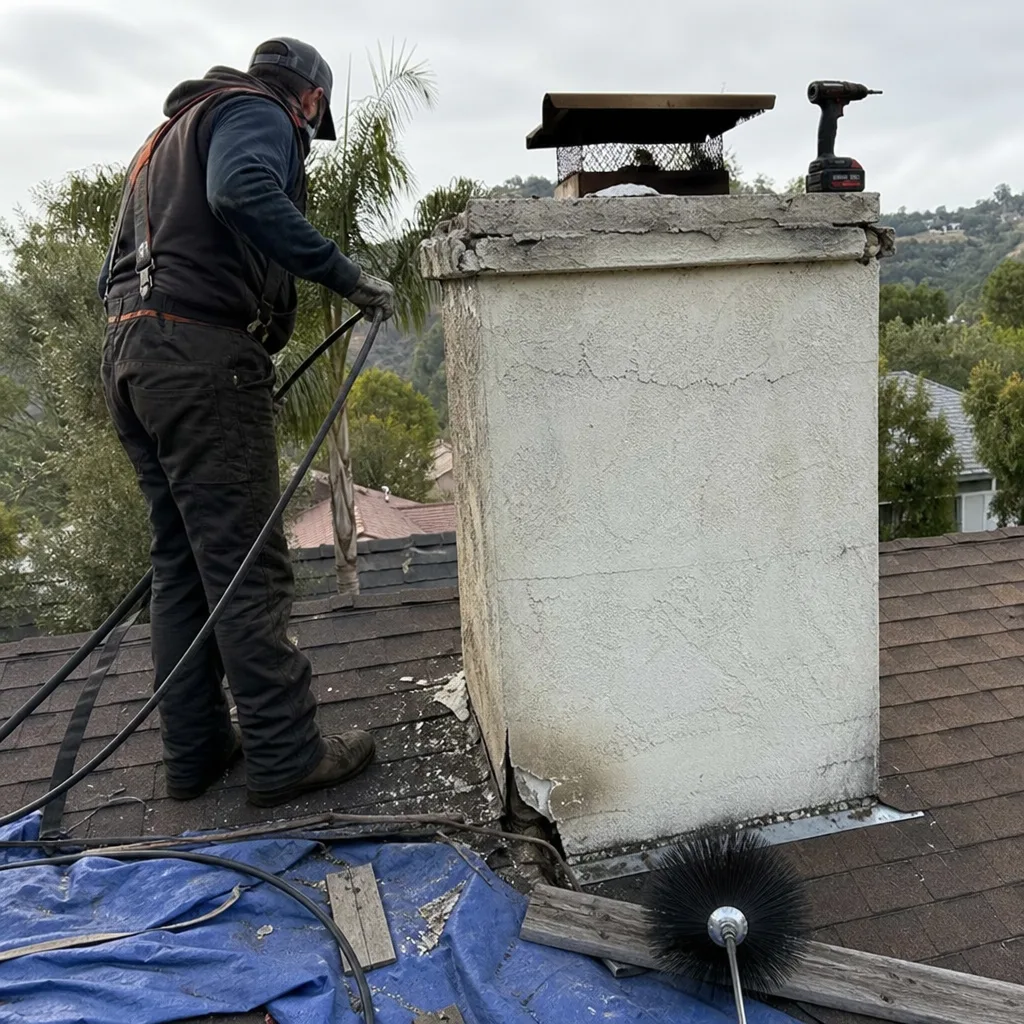 Before
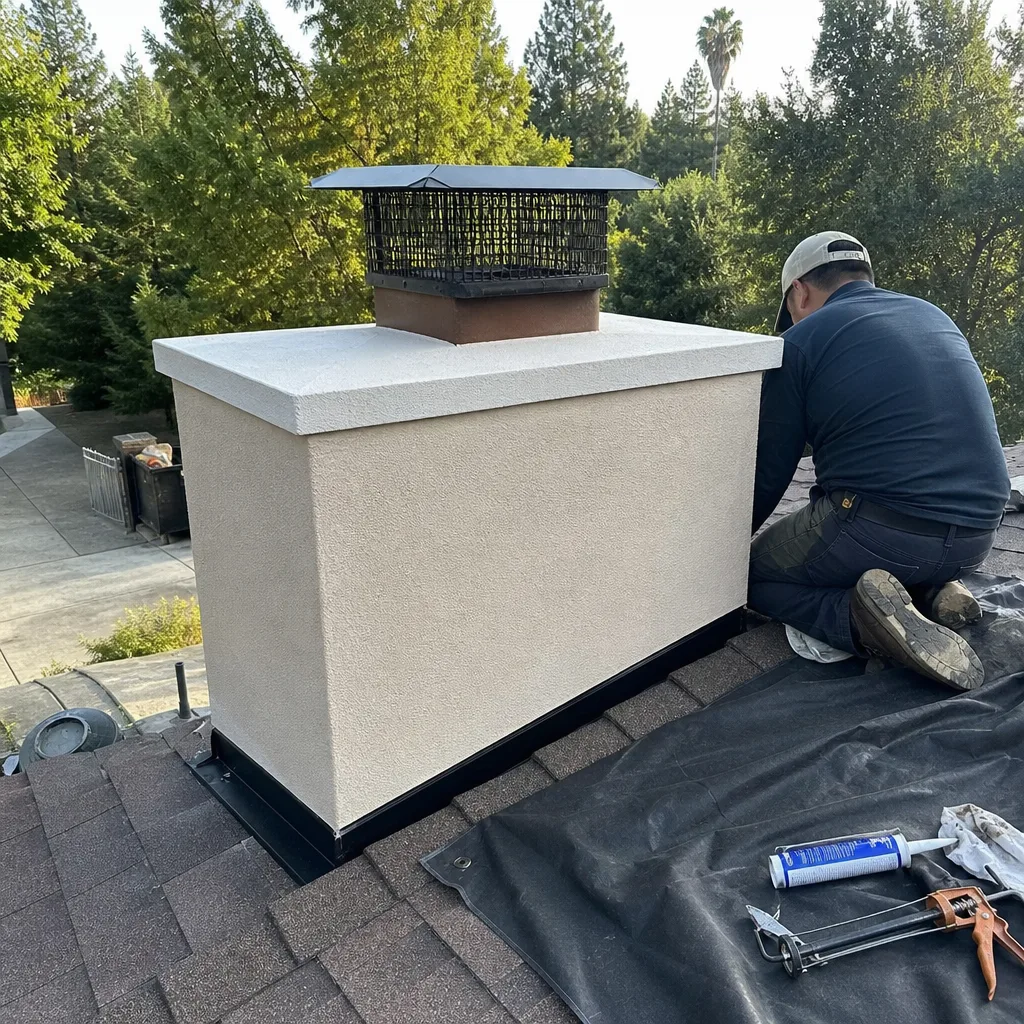 After
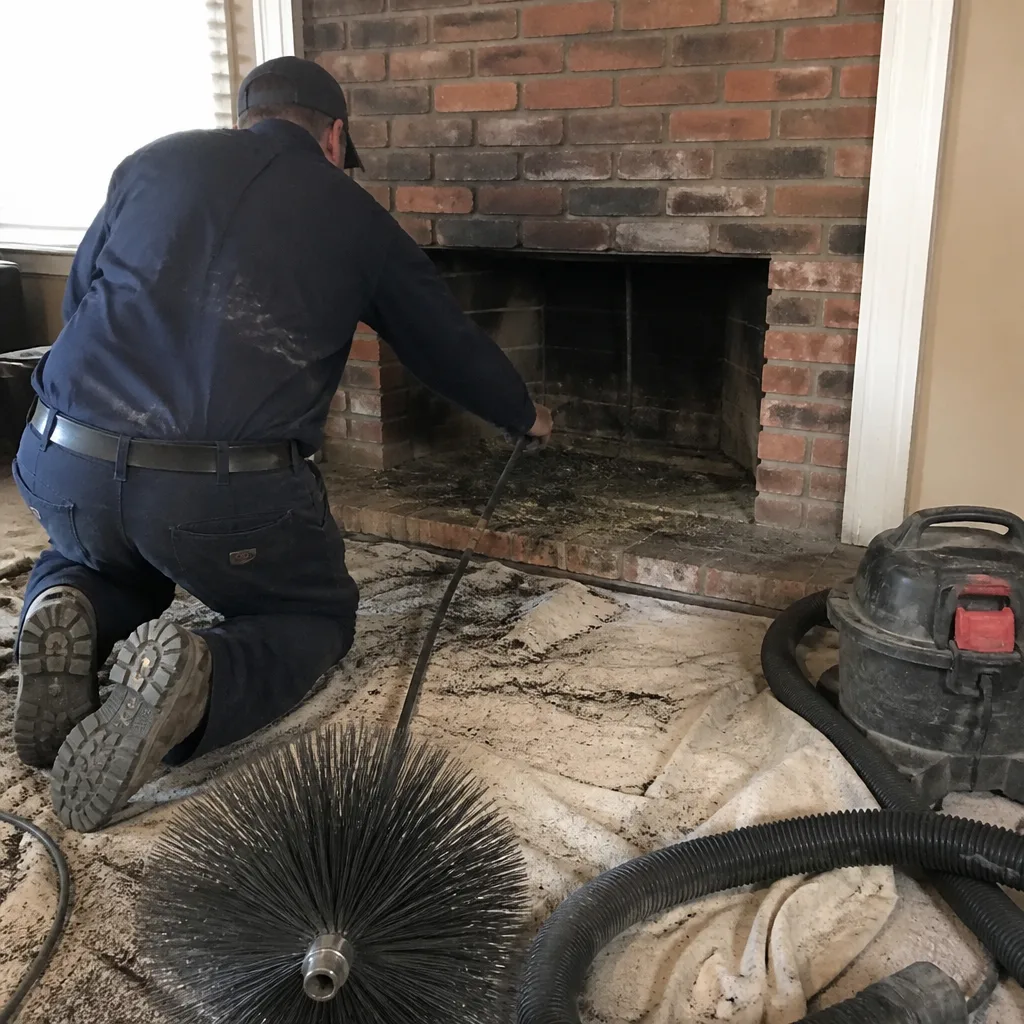 Before
 After
 Before
 After