
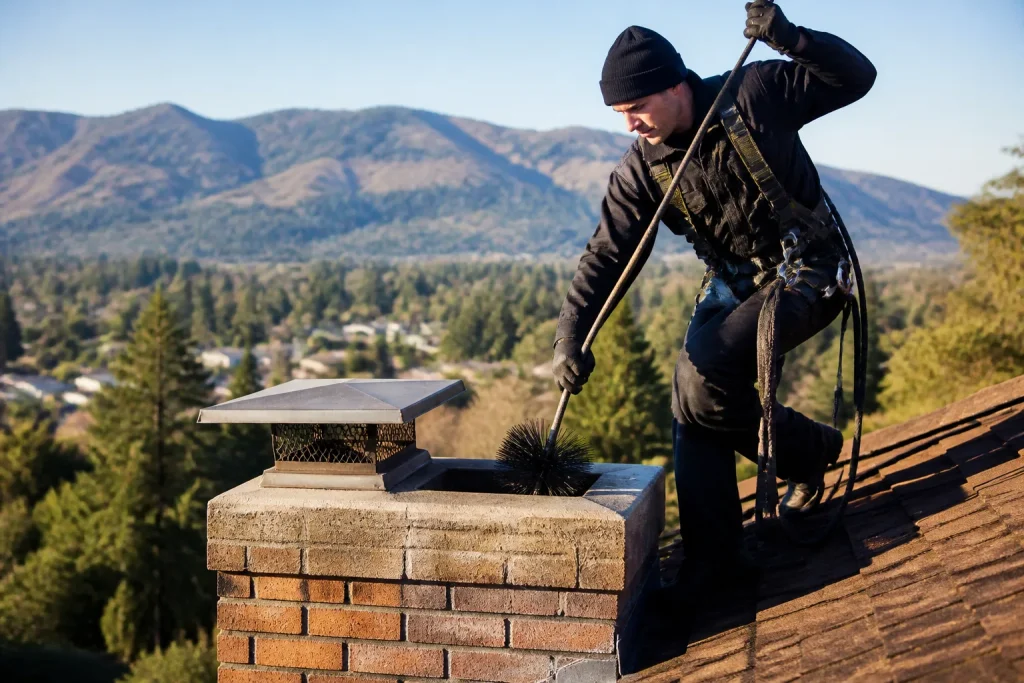
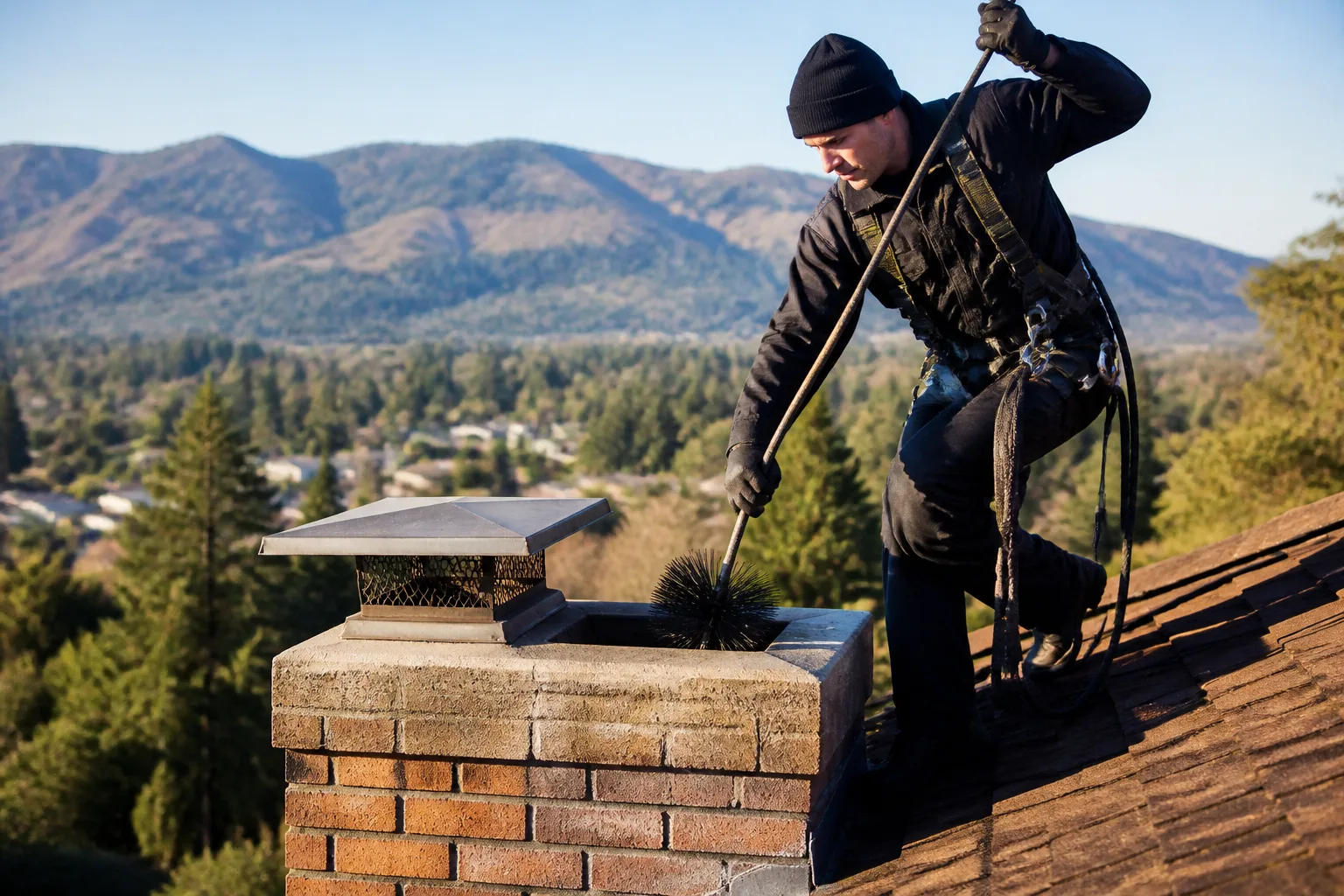
Emergency Chimney Sweep Near Me: What Vermont Vista Homeowners Should Do First
If you hear a low roar or crackling sound coming from your fireplace with no fire burning, that’s an active chimney fire, and the right first move is not calling a sweep. Close the damper, get everyone out of the house, and call 911, in that order. For everything short of that, an emergency sweep in Vermont Vista starts with stopping use of the appliance and documenting what you’re seeing so a technician can diagnose the problem accurately.
The second call after 911, or the first call if you’re dealing with smoke intrusion or suspected blockage rather than flames, should be to a chimney specialist who can assess what’s actually happening. If you’d rather not deal with the uncertainty, call us at (888) 453-5781 and we’ll walk you through what you’re seeing.
The Four Real Chimney Emergencies in Vermont Vista
Not every chimney problem is an emergency. Most issues we see in Vermont Vista homes are urgent in the sense that they should be addressed this week, not tonight. But four situations demand immediate action: an active chimney fire, carbon monoxide intrusion, structural collapse risk, and sudden total blockage.
An active chimney fire announces itself with a sound that homeowners often describe as a freight train or low jet engine behind the wall. You might see flames shooting from the top of the flue or heavy ember discharge onto the roof. In Vermont Vista, where homes sit close together and stucco fascia can conceal burning embers in the eaves, this is a neighborhood risk, not just a household one.
Carbon monoxide intrusion is quieter. It shows up as headaches, dizziness, or nausea that improves when you leave the house, often accompanied by a sooty smell or visible smoke coming back into the room even when the damper is open. If your CO detector is sounding and your gas appliance was running, treat it as real, ventilate, and get out.
Structural risk is visible: a leaning chimney stack, falling mortar chunks, or a flue that’s shifted after a storm or minor seismic activity. Vermont Vista sits in a region where ground movement can stress masonry that old. Sudden total blockage means your fireplace behaved normally yesterday and today smoke pours into the room with no draft at all, often after a heavy storm or an animal intrusion.
Everything else, creosote buildup, a smoked-glass smell, a damper that’s stuck, those are scheduled-service situations. They matter, but they don’t require a 2 a.m. call.
The Damper-and-Door Protocol During a Chimney Fire
The sequence matters more than most people realize. Closing the damper starves the fire of oxygen, which is the goal. But if you close the damper while smoke is actively pouring into the room, you trap that smoke inside with you. So the order is: close the glass fireplace doors if you have them, close the damper, then close any doors between the fire room and the rest of the house, and get out.
Do not throw water into a fireplace with an active chimney fire. The thermal shock can crack the firebox and send steam and embers back into the room. Do not climb on the roof to look. We’ve seen the aftermath of both decisions in Vermont Vista, and neither ends well.
Once the fire department has cleared the scene, the fireplace is out of service. No exceptions. The flue has been subjected to temperatures it wasn’t designed to handle repeatedly, and even a visual pass isn’t enough to certify it safe. That leads to the next step, which is documentation and inspection.
Documenting the Damage: What to Record Before the Sweep Arrives
The hour after an emergency is when the evidence is freshest. Take photos of everything: smoke staining on the mantel or ceiling, creosote flakes that have fallen into the firebox, any cracks in the chimney exterior you can see from the ground, and the condition of the cap if it’s visible. Note the exact time the event started and what the fire was doing at the moment, whether the flue was hot from normal use or the appliance was cold.
Record the sounds. A low rumble versus a crackling noise versus a whistling draft each point to different failure modes. Write down any smell: acrid chemical odor, barbecue smell, or the dusty smell of old brick that’s suddenly present in the room.
This documentation matters for two reasons. First, it gives the technician a starting point for diagnosis. Second, if you’re filing an insurance claim in Vermont Vista, adjusters respond differently to a homeowner who can show a timeline and photos versus one who says “the fireplace made a noise.” We’ve had customers whose thorough documentation shaved weeks off a claim.
What an “Emergency Sweep” Actually Includes in Vermont Vista
Here’s the part most homeowners don’t understand until they’re standing in the middle of it. An emergency sweep is usually a compressed safety inspection, not a full cleaning. The goal is to determine whether the flue is safe to use and what failed, not to restore it to new condition. Anyone promising a full, thorough sweep at 9 p.m. is either cutting corners or not explaining what they’re actually doing.
When you call a company in Vermont Vista for an emergency visit, ask these questions before they arrive:
- What does the emergency visit include, exactly? Inspection only, or inspection plus cleaning?
- Is camera inspection part of the visit? If not, why not?
- Will I get a written report with photos, or a verbal summary?
- If you find damage, can you repair it, or do you refer me elsewhere?
- What’s the flat price for the visit, and what costs extra?
We carry camera equipment to every call, emergency or scheduled, because a flue liner that looks fine from the firebox can be cracked at the top where you can’t see. Brands like Olympia Chimney and Copperfield make components we use regularly because we’ve learned which materials hold up in the specific conditions Vermont Vista throws at them, salt-tinged coastal air, seasonal heat, and occasional ground movement.
What happens when you call
- 1
A real person answersNo phone trees – you reach a local pro.
- 2
You get an upfront price rangeHonest numbers before anyone is dispatched.
- 3
A background-checked tech heads outLicensed & insured, dispatched right away.
- 4
You approve before work beginsNothing starts until you say go.
After a Chimney Fire: Level 2 Inspection Under NFPA 211
NFPA 211 is the standard that governs chimney inspection and maintenance, and after any chimney fire, a Level 2 inspection is the minimum required before the fireplace can be used again. This is not optional, and it’s not a matter of opinion. It’s the standard.
A Level 1 inspection is visual and accessible-only, what happens during a routine sweep. A Level 2 inspection goes further: video scanning of the entire flue interior, access to the attic and crawl spaces where the chimney passes through, and documentation of the flue’s condition from top to bottom. The difference matters because chimney fires can damage the flue liner in places you’ll never see from the ground or the firebox.
We pulled a liner out of a chimney over near the Vermont Vista park boundary last year where the homeowner had been told after a chimney fire that everything “looked fine.” The ceramic liner was shattered in the middle of the flue, held in place only by its own geometry. One more burn season and that house would have had a fire inside its walls.
If the inspection reveals liner damage, ask about options. Full liner replacement is sometimes the answer, but it’s not always the only answer. HeatShield, a ceramic resurfacing system, can restore a damaged liner without full teardown in many cases, and DuraFlex liners are what we install when full replacement is the right call. The point is that a specialist should be able to explain the options, not just quote you the most expensive one.
Urgent But Not Emergency: When You Can Wait for a Scheduled Call
With every “emergency” call we get in Vermont Vista, a certain number turn out to be urgent-seasonal issues, not immediate dangers. Understanding the difference saves you money and keeps emergency slots available for people who actually need them.
Heavy creosote accumulation visible in the firebox is a don’t-use-it-until-cleaned situation, but it can wait for a next-day or same-week appointment. A draft that’s degraded over weeks means something changed, but it doesn’t require a 911 response. Smoke that puffs into the room only when the fireplace first catches or when the wind blows a certain direction suggests a draft or cap issue that scheduled service can address.
We see this pattern in Vermont Vista frequently: a homeowner skips a season or two of sweeping, then feels the creosote smell one evening and decides the house is about to catch fire. Creosote that’s sitting inside the flue is a fire risk, yes. But it’s a controlled risk you can eliminate by not using the appliance until it’s cleaned. The emergency is when heat and blockage combine. Take the heat away, and the risk drops dramatically. This is the kind of straight answer we give on every call, because treating a non-emergency as an emergency doesn’t serve anyone.
When to Call a Pro
If you’ve experienced a chimney fire, even a small one, you need a professional inspection before the fireplace is used again. If your CO detector has alarmed, you need a professional. If the chimney is leaning, spalling bricks, or dropping mortar, you need a professional. And if smoke is coming into the room instead of going up the flue, you need a professional.
Related services in Vermont Vista: Chimney Sweep in Vermont Vista covers routine cleaning and Level 1 inspection, while Chimney Repair in Vermont Vista addresses structural and liner damage found during any service. And if your dryer vent hasn’t been cleaned in years, that’s a separate fire risk worth addressing: Dryer Vent Cleaning in Vermont Vista.
The Bottom Line
Chimney emergencies in Vermont Vista break down into four categories, and your first move is different for each: active chimney fire means damper closed and 911. CO intrusion means ventilate and get out. Structural risk means stay clear of the chimney and call a professional. Sudden blockage means stop using the appliance and schedule an inspection.
Before the sweep arrives, document everything: photos, sounds, smells, and a timeline. The information makes the difference between a guess and a diagnosis. After any chimney fire, insist on a Level 2 inspection under NFPA 211, and don’t accept a visual pass as sufficient. And when you’re talking to a company, ask what the emergency visit actually includes, because “emergency sweep” can mean a lot of different things depending on who’s on the phone.
If you’re in Vermont Vista and need help with a chimney, dryer vent, or repair situation, Chimney Sweep Vermont Vista home services start with a straight answer. We offer free estimates, and we’ll tell you plainly if the problem can wait. Call (888) 453-5781.
Frequently Asked Questions
Emergency chimney visits in Vermont Vista typically run $250 to $500 for the inspection itself, with cleaning and repairs priced separately after we see what’s actually going on. The range is broad because some “emergencies” are scheduled visits that happen to occur at night, while true emergencies require immediate mobilization. We quote a flat price before we arrive so you’re not paying a mystery premium for urgency. Call (888) 453-5781 for a specific quote on your situation.
Not until a Level 2 inspection under NFPA 211 has been completed and any required repairs are done. That’s the standard, and it exists because chimney fires damage flue liners in ways that visible inspection cannot detect. The timeframe depends on what the inspection finds. A clean bill of health means you might burn again within a week. Liner damage means replacement or resurfacing first, which could be two to three weeks. This is not the place to rush.
If you smell smoke and see smoke, and the fireplace is off, open windows and check whether the smell is coming from the fireplace opening. Smoke without flames is usually a draft or blockage issue, not an active fire, and the first call should be to a sweep. If you smell smoke and hear a rumbling sound from the chimney, that’s an active fire and the order is 911 first, sweep second. If you’re not sure, call 911. The fire department in Vermont Vista would rather respond to a false alarm than to a structure fire that could have been stopped.
Yes, if a chimney fire occurred. Flue liner damage from thermal stress shows up as hairline cracks, gaps at the joints, or spalled ceramic surfaces, and none of that is visible through the firebox opening. A camera inspection is the standard tool for a Level 2 inspection under NFPA 211, which is what’s required after any chimney fire. Companies that skip the camera and pronounce a fireplace safe after a fire are gambling with your house, and you should not accept that gamble.
Written by the team at Chimney Sweep Vermont Vista, serving Vermont Vista since 2017.
Need Chimney Cleaning Help?
Call Chimney Sweep Vermont Vista - licensed & insured, here with fast help in Vermont Vista.
(888) 453-5781